
Getting a Brampton Home Ready for Winter: The Repairs That Matter Before the Freeze
Two Brampton houses, two different winter lists
A 1970s back-split in one of Bramalea’s letter sections and a ten-year-old detached house in Castlemore do not face winter the same way. The Bramalea house has a mature maple canopy, original drainage patterns that have had fifty years to shift, and window frames that have already been painted, sealed, and re-sealed more than once. The Castlemore or Mount Pleasant house is tighter and newer, but its builder caulking is reaching the age where it cracks, its door seals have flattened, and its finished basement — like so many in Brampton — depends on window wells and downspouts doing their jobs all winter long.
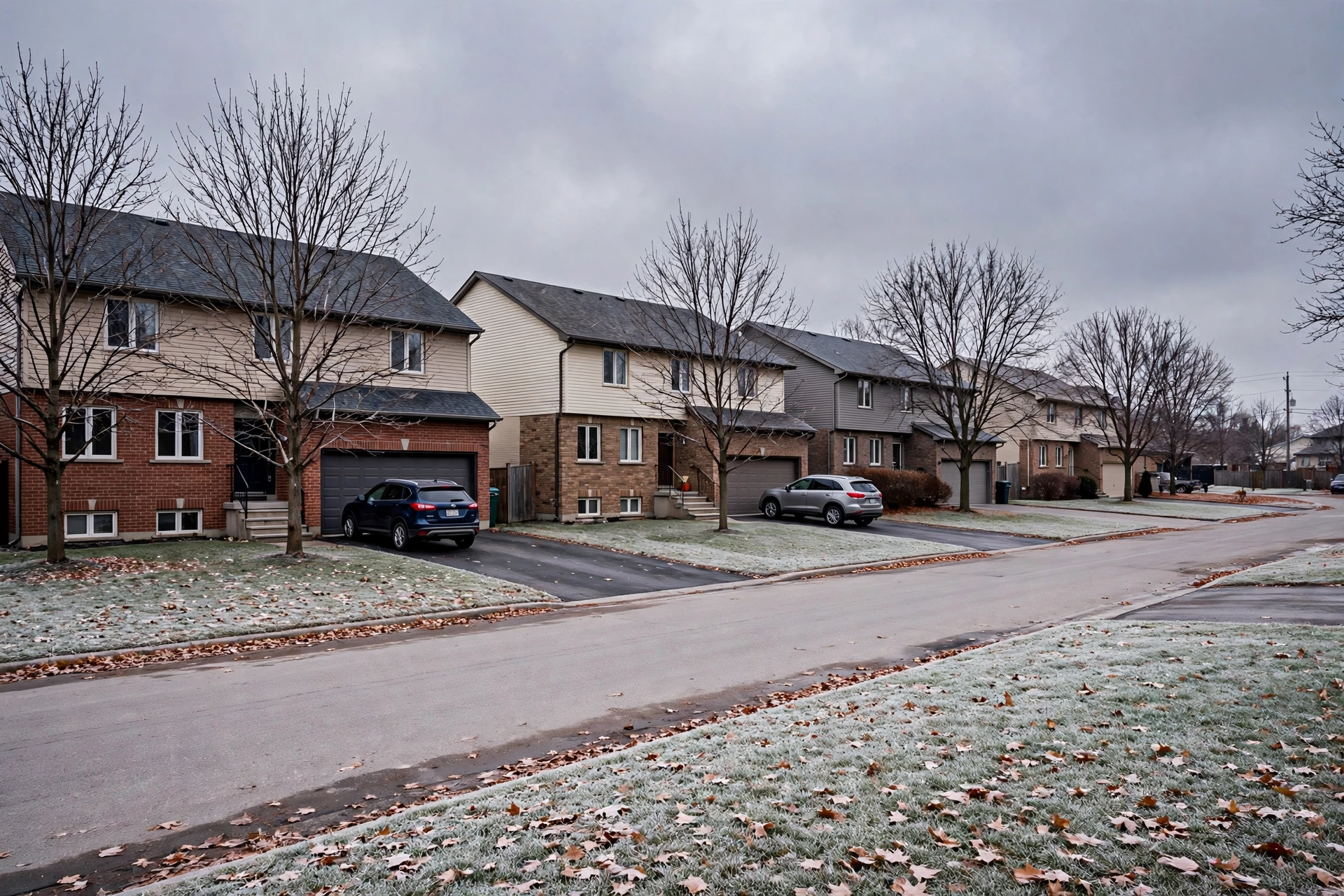
Downtown Brampton and Heart Lake add older housing stock again, Springdale and Sandringham-Wellington sit in between, and townhome rows in Fletcher’s Meadow share rooflines, driveways, and drainage with their neighbours. What they all share is the late-October window: a few dry weeks when sealants still cure, ladders are still safe, and a small repair is still a small repair. Once Brampton settles into freeze-and-thaw — snow that melts at noon and locks solid by dinner — every gap you ignored becomes an entry point for water or a leak for heated air.
Work from the roofline down, then from the outside in. That order catches the problems in the sequence winter will find them.
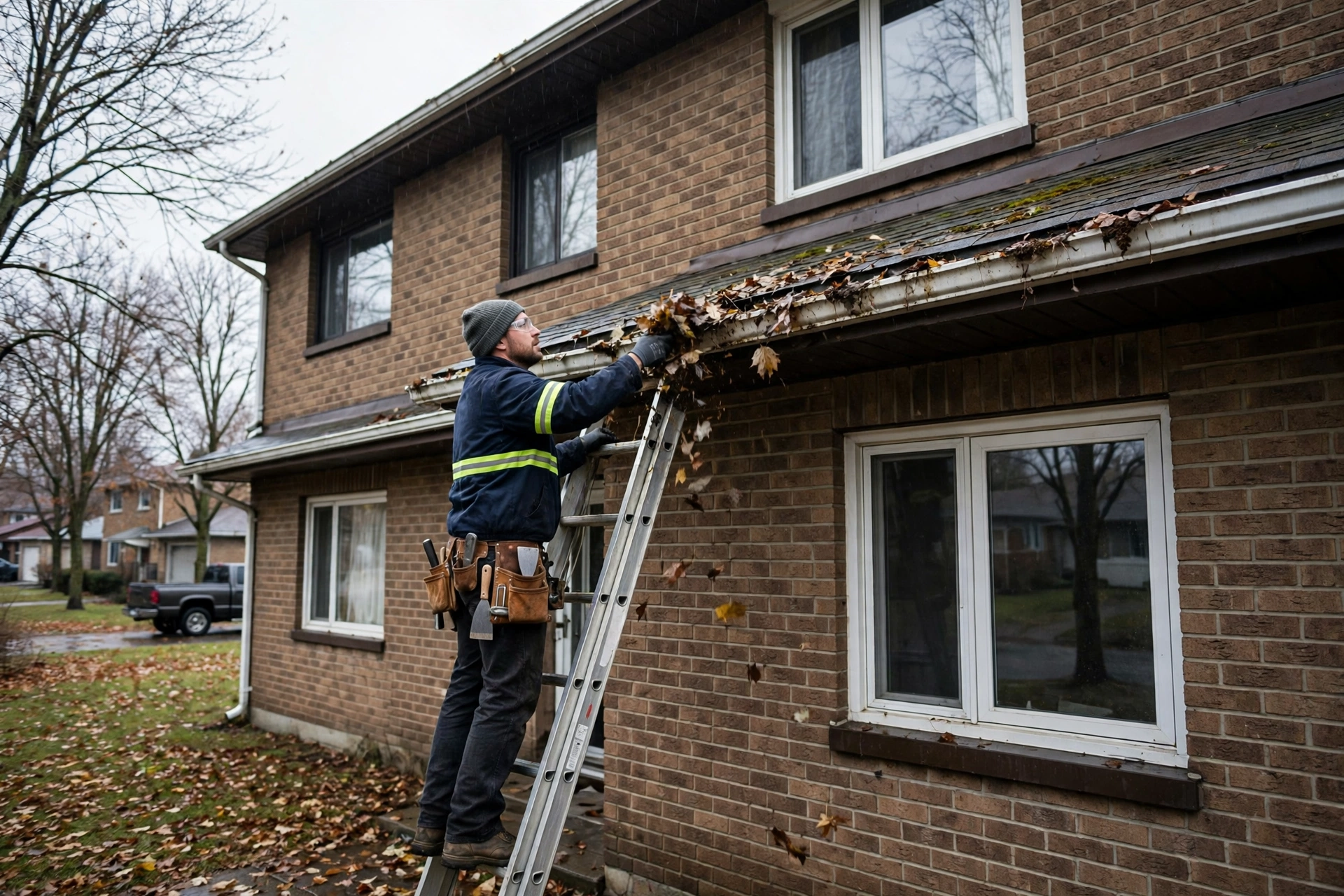
Start at the eavestroughs, especially under Bramalea’s trees
Streets near Heart Lake Conservation Area, Professor’s Lake, and through Bramalea’s older sections drop far more leaves than a newer street in Mount Pleasant, where the trees are still young. By the last week of October those leaves are not sitting dry and loose in the troughs — they are wet, matted, and mixed with shingle grit. A trough packed that way holds water against the fascia. Frozen, that water gets heavy, pulls on hangers, opens corner joints, and pushes overflow toward the wall instead of the downspout.
Scoop the troughs clean, then run a hose and watch each downspout actually discharge. A downspout that trickles is blocked at an elbow, usually at the bottom. Check, too, for a trough that still ponds after flushing. Standing water in October is a strip of ice in December, and it usually means the slope has sagged or a hanger has let go.
Look at the landing spot as carefully as the roofline. In Brampton, where a large share of homes have finished basements, a downspout dumping beside the foundation is not a minor detail. Extensions should move water clear of basement walls and window wells, and not across a driveway or front walk where meltwater refreezes overnight. If a section is bent, leaking at every joint, or pulling away from the house, cleaning will not fix it — look at what proper gutter installation covers so you can judge whether you are facing a repair or a replacement.
What affects the cost of having this done for you: roof height and total trough length, how many downspouts need clearing or repair, whether sections need re-sloping or resealing, and whether extensions need to be added or replaced. The house itself sets the scope, which is why a real quote comes after someone has looked at it.
Doors: find the draft before the furnace has to fight it
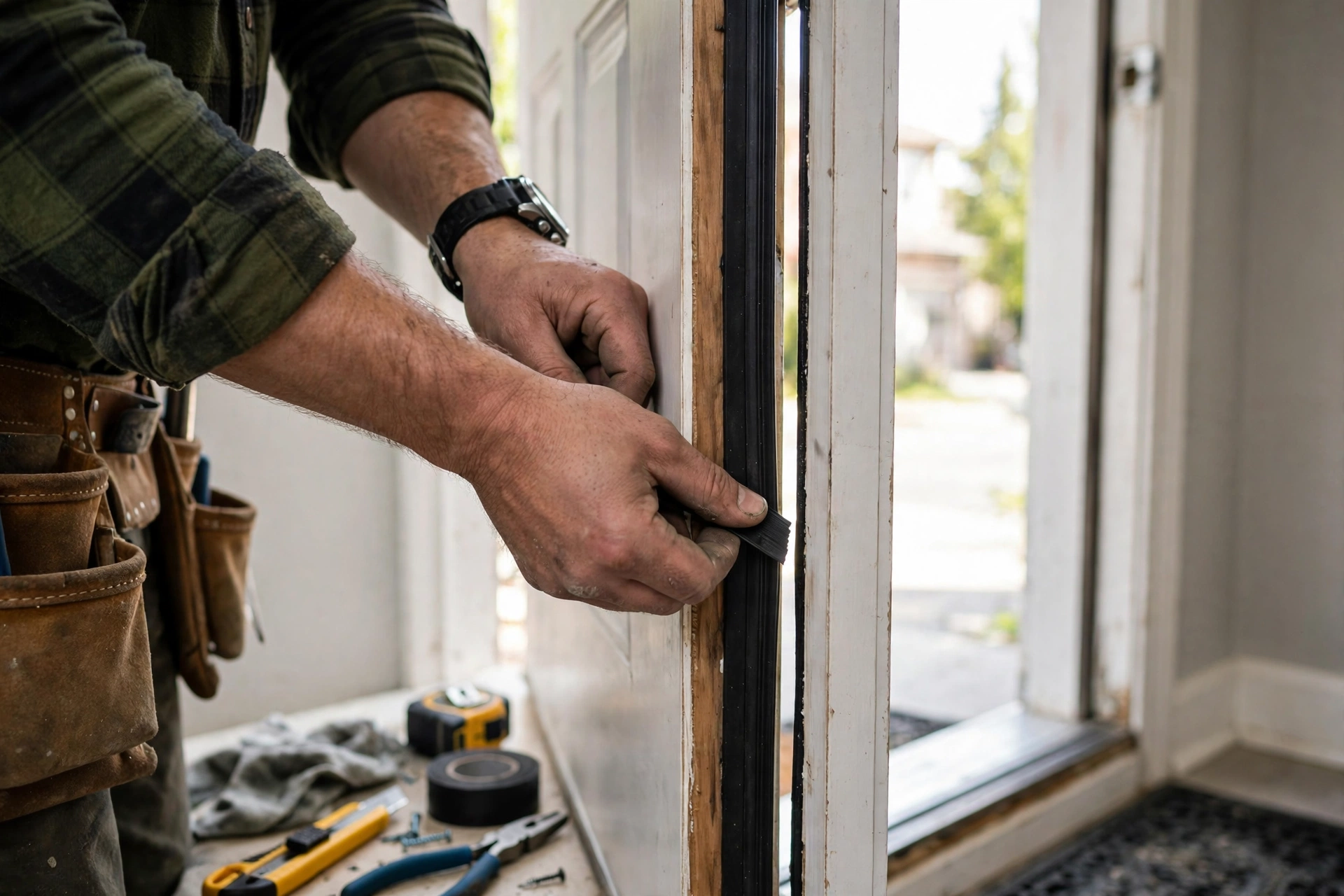
On a windy evening, move a hand slowly around your front door, the garage entry door, and any patio door. In Springdale and Fletcher’s Meadow townhomes, the garage entry door is often the leakiest in the house and the least used in fall, so its torn sweep goes unnoticed until the room beside the garage turns cold. In older Bramalea and downtown homes, look for daylight at the bottom corners — a sign the threshold, the sweep, or the frame itself has moved.
Most newer Brampton builds use foam or rubber stripping pressed into a groove in the frame. When it is fresh it springs back; when it is done it stays flat and hard. Replacing it is simple if the groove is sound. The sweep along the bottom is a separate part and fails separately, especially where it drags on a high spot in the floor or a winter mat.
One caution that saves a wasted repair: seal the alignment first. A door you have to shoulder closed, or one where the latch side gap is visibly wider at the top than the bottom, will not be cured by new stripping alone. It needs adjustment, and sometimes hinge or strike work, before any seal can do its job. When stripping, a sweep, and adjustment are all on the list, booking them together as weather stripping installation is the efficient way to close the whole problem in one visit.
Window caulking: read the bead like a report card
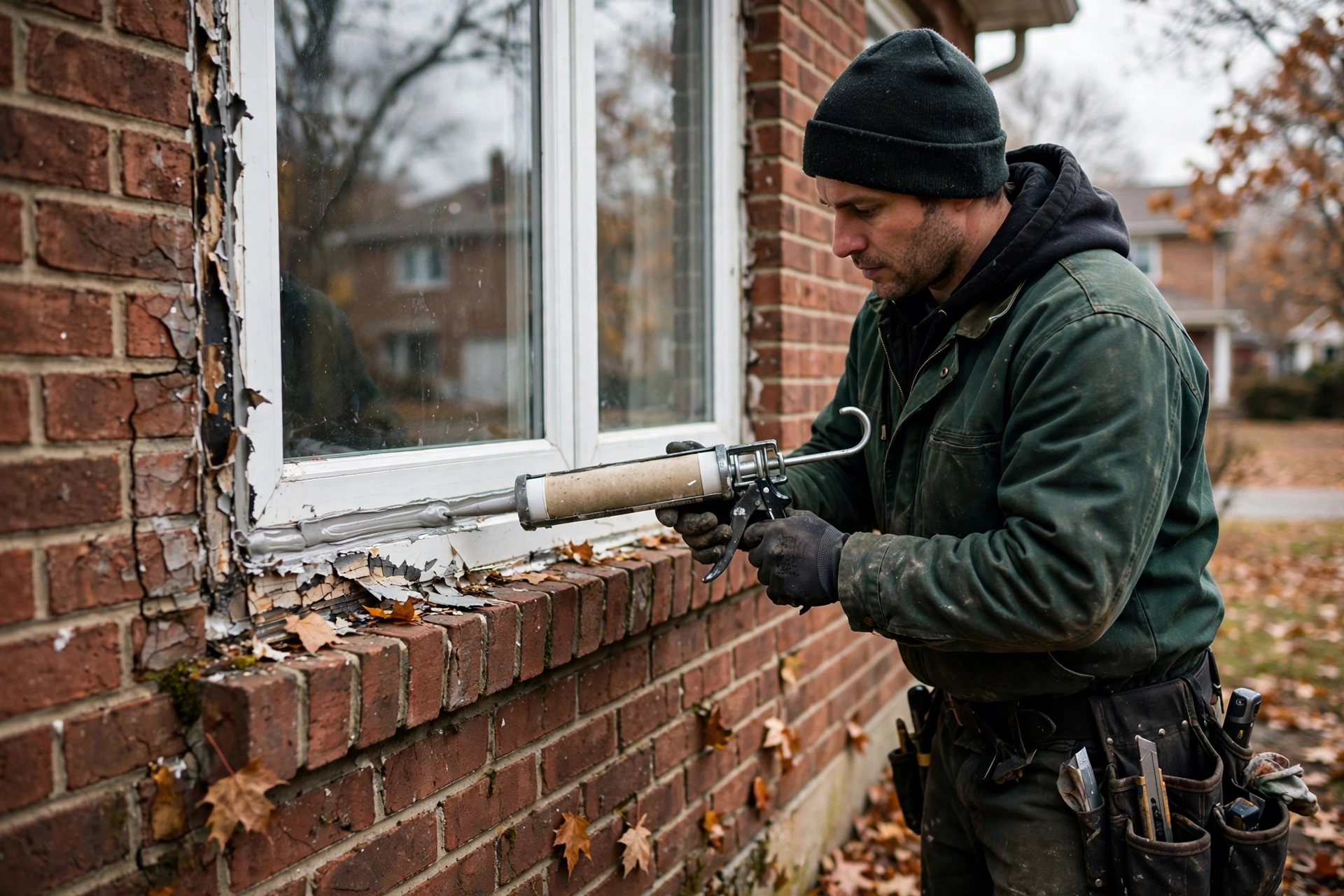
Exterior caulking tells you how the last few winters went. A bead that is cracked in a long straight line has lost its flexibility. One that is peeling away from the brick in a ribbon has lost its bond. One that is missing at the top of a frame is the most serious of the three, because it funnels water into the wall every time wind drives rain or snowmelt against that side of the house.
Walk all four walls, not just the front. Check window and door frames, siding-to-trim joints, vents, hose bibs, and the spots where cables and conduits come through the wall. South and west faces in Castlemore and Mount Pleasant take hard sun in summer and hard freeze in winter, and their caulking usually ages first. On older wood-trim homes in Heart Lake and downtown, press gently at painted joints that look blistered — soft wood under paint often means water has already been getting in behind a failed bead.
A lasting repair is unglamorous work: cut out the failed material completely, clean and dry the joint, then lay and tool a new bead so it grips both sides. A fresh bead smeared over a cracked one looks tidy for a month and separates by spring. Temperature matters too — most exterior sealants need above-freezing conditions to cure, which is the practical reason this job belongs in October and not on the first cold weekend of December. If most of the house needs doing, professional caulking services can strip and reseal the exterior in one pass, and deal with tired kitchen and bathroom seals inside on the same visit.
The basement and utility checks Brampton owners skip
Window wells. Clear every well before snow arrives. In neighbourhoods full of finished basements — Bramalea, Springdale, and the newer builds alike — a well full of leaves holds meltwater tight against a basement window for months, and that window was never designed to be a dam.
Outside water. Take hoses off, drain exterior taps, and close the inside shut-off for each outside faucet if your home has one. A hose left attached through a Brampton cold snap can burst a pipe inside the wall, and the damage often announces itself in the spring thaw, long after the freeze that caused it.
Attic hatch. Many Brampton homes, old and new, have a hatch that is neither insulated nor sealed. Warm, damp indoor air leaking into a cold attic condenses on the roof sheathing. A gasket and an insulated hatch cover are small, permanent fixes.
Heating and alarms. Start winter on a fresh furnace filter and confirm registers in the far bedrooms — often the coldest rooms in two-storey Brampton plans — are open and not buried under storage bins moved for the season. Test smoke and carbon monoxide alarms at the same time; Ontario homes with a fuel-burning appliance or an attached garage need working CO alarms near sleeping areas, and winter is when every one of those appliances works hardest.
A Brampton before-the-freeze checklist
- Eavestroughs scooped and flushed; downspouts confirmed running freely
- Extensions carrying water away from basement walls, wells, and walkways
- Sagging, dripping, or separated trough sections repaired, not just cleaned
- Front, garage-entry, and patio doors checked by hand for moving air; worn stripping and sweeps replaced
- Any door that needs lifting or forcing checked for alignment before sealing
- Exterior caulking inspected on all four walls; failed beads cut out and replaced while temperatures still allow curing
- Window wells cleared; hoses removed and exterior taps drained
- Attic hatch gasket checked; furnace filter changed; alarms tested
One dry weekend covers most of that list for most Brampton homes. It is not exciting work, but it is the difference between spending January comfortable and spending it arranging an urgent repair in the coldest, busiest week of the year.
Need a hand getting your Brampton home winter-ready?
If the trough is pulling away, the door still leaks air after new stripping, or the caulking list has grown past a weekend job, call Peter at 289-814-8834 or send a message through our contact page and get the work booked before the freeze sets in.