
Common TV Mounting Mistakes Professionals See
Common TV Mounting Mistakes Professionals See in Brampton and the GTA
TV mounting looks simple until something goes wrong. In Brampton and across the GTA, I regularly get called to fix installs that seemed fine at first but later turned into sagging mounts, damaged drywall, exposed wires, crooked screens, or even fallen TVs. The biggest issue is that many homeowners focus on appearance first and structure second.
A professional TV install is not just about getting the screen on the wall. It is about safety, viewing comfort, long-term reliability, and making the setup look like it was meant to be there from day one.
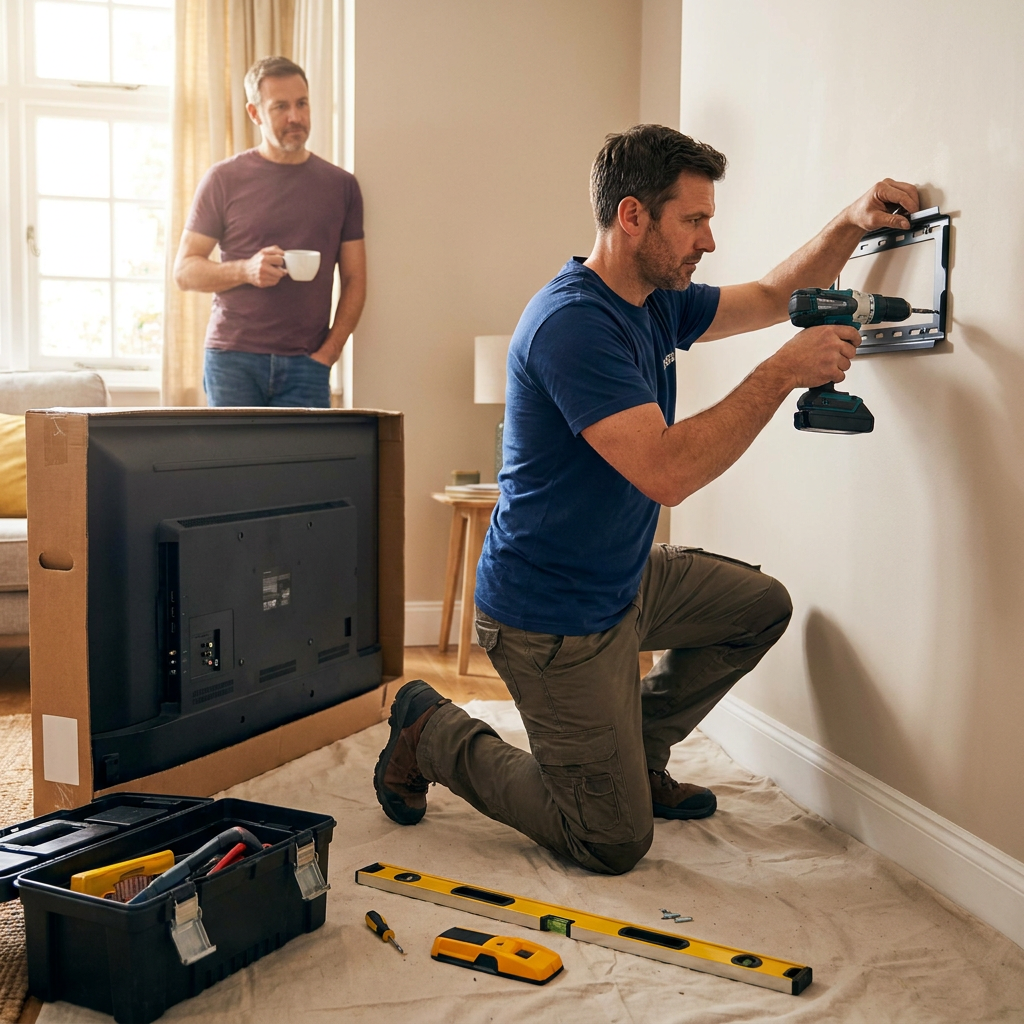
The Most Serious Mistake: Mounting Into Drywall
One of the worst TV mounting mistakes I have seen was a homeowner who mounted a 75-inch TV directly into drywall using heavy-duty drywall anchors instead of securing the mount to wall studs. At first, everything seemed fine. The TV stayed up for weeks, but every time the mount was tilted or adjusted, it added more stress to the drywall.
Eventually, the anchors started pulling out. The customer heard cracking sounds one evening, and the next day the entire mount ripped free and sent the TV crashing to the floor. The result was a destroyed TV, a large hole in the drywall, and damage to a media console underneath.
What many people do not realize is that a TV mount creates more than just downward pressure. The TV sits several inches away from the wall, which creates leverage and pulls outward on the fasteners. Drywall alone is not designed to handle that kind of force over time, especially with larger screens or full-motion mounts.
To fix that job, I repaired the damaged wall, found the studs properly, installed a new mount with lag bolts directly into the framing, and made sure everything was level and secure. Since then, I always stress the same thing: for most TVs, especially anything over 55 inches, the mount should be anchored into studs or another structurally sound backing, not just drywall.
Mistakes I See Most Often
After fixing a lot of bad installs across Brampton and the GTA, a few mistakes come up again and again. These are the ones I see most often in homes, condos, and finished basements.
Missing the wall studs
This is the most common problem by far. Homeowners either rely on drywall anchors or catch only the edge of a stud instead of the center. The mount may seem secure at first, but over time the weight of the TV can loosen the fasteners, cause sagging, or pull the mount out of the wall.
Using the wrong mounting hardware
A lot of DIY installers use screws from another mount, bolts that are too short, or hardware that does not match the TV’s VESA pattern. I have seen TVs hanging by only two properly secured bolts because the others did not fit correctly. That kind of setup can lead to wobbling, instability, and complaints that the TV never feels fully secure.
Mounting above a fireplace without thinking it through
This is a big one in newer homes with open-concept living rooms and feature walls. Mounting above a fireplace often looks great in photos, but the TV can end up too high and uncomfortable to watch. In some cases, heat from the fireplace can also affect the electronics. A lot of customers call back later because they realize the viewing angle is awkward and the setup is not actually enjoyable.
Ignoring hidden electrical or plumbing lines
Some homeowners drill into the wall without checking what is behind it. I have repaired situations where a screw nicked an electrical cable, which creates a serious safety hazard and usually means opening the wall and doing repairs. This is especially common in finished basements and renovated homes where the wiring path is not obvious.
Poor cable management
Cable management may not make the TV fall off the wall, but it is one of the biggest sources of disappointment. Loose, hanging wires make the installation look unfinished and cheap. Poor routing can also put strain on HDMI and power connections over time, especially if the TV is on a swivel or full-motion mount.
Why Fireplace Mounting Is Not Always Best
I get a lot of requests to mount TVs above fireplaces because it looks great in photos and on home renovation shows. In some homes, it works fine. In many others, it is not the best place for the TV.
The biggest problem is height. People often mount the screen too high, which makes viewing uncomfortable and can cause neck strain over time. Fireplaces also introduce heat concerns, and depending on the layout of the room, they can create glare or force the seating position into an awkward spot.
My view is simple: just because a TV can be mounted somewhere does not mean it should be. If I am being honest with a customer, I would rather recommend the best viewing location than simply the most popular one.
My Professional Mounting Process
When I am called in to fix a bad TV installation, I follow the same process I use for every new mount. The goal is not just getting the TV on the wall. It is making sure it is secure, level, clean-looking, and built to last for years.
Evaluate the wall first
Before drilling anything, I identify the wall type and check for obstacles behind it. Drywall, wood studs, metal studs, concrete, brick, plumbing, HVAC, and fireplace components all require different approaches. The right mounting method depends on what is actually behind the wall.
Confirm the ideal viewing height
Many DIY installs end up too high. I look at seating position, room layout, and TV size with the homeowner. For most living rooms, the center of the screen should be close to eye level when seated.
Locate and verify studs
I never rely on a stud finder alone. I use multiple verification methods to confirm the exact stud location and centerline. For large TVs, hitting the center of the studs is critical for long-term stability.
Select the correct mount and hardware
The mount has to be rated for the TV size and weight. I also verify VESA compatibility, proper lag bolt length, correct TV screws, and enough load capacity for the wall structure.
Measure twice, drill once
I mark the stud locations, bracket height, and mount position carefully. That prevents unnecessary wall damage and helps keep the TV centered with furniture, fireplaces, or feature walls.
Install the wall plate securely
The wall plate is the foundation of the entire installation. I use the proper fasteners and tighten them correctly so the mount is secure without damaging the wall structure.
Level everything
Even a small tilt becomes obvious on a 65-inch or 75-inch screen. I level the wall plate before hanging the TV and then make final adjustments after it is on the wall.
Manage cables professionally
This is where many jobs start to look amateur. Depending on the wall and the code requirements, I conceal cables in-wall where appropriate, use cable raceways when needed, and make sure HDMI and power connections are not under strain.
Test the mount under load
Before I call the job complete, I check the movement, locking mechanisms, tilt or swivel functions, fastener security, and overall TV stability.
Final inspection with the homeowner
I always walk the customer through the setup, confirm the viewing angle, demonstrate how the mount works, and make sure they are happy before packing up.
Common Myths Homeowners Believe
A lot of TV mounting advice sounds reasonable on the surface, but it can lead to problems if people treat it as fact.
Heavy-duty drywall anchors are just as good as studs
This is probably the biggest misconception. Many anchors are rated for impressive weight, but those ratings often assume a straight downward load. A TV mount creates leverage that pulls away from the wall, especially with tilting and full-motion mounts.
If the TV has not fallen yet, the install is fine
I have seen mounts stay up for months before the problems show up. Fasteners can loosen, drywall can compress, and the mount can begin to sag over time. Just because a TV is still hanging does not mean it was installed correctly.
Bigger TVs need much higher mounting positions
Many homeowners mount large TVs too high because they think the screen size should sit higher on the wall. In reality, the viewing principle does not change. The center of the screen should generally be close to seated eye level.
Any wall can support any TV
That is not true. Wood-stud walls, steel-stud walls, concrete, brick, and older plaster walls all require different methods and hardware. What works safely on one wall may be completely wrong on another.
The mount from my last TV will work again
TVs have different weights, VESA patterns, and dimensions. I have seen reused mounts that technically fit but were not rated for the new TV’s size or weight. It is always better to verify compatibility instead of assuming.
Cable management is just cosmetic
Loose cables are not only an appearance issue. They can stress connectors, limit mount movement, create tripping hazards, and make future maintenance much harder.
A stud finder is foolproof
Stud finders are useful, but they can be fooled by pipes, wiring, metal corner beads, and other materials inside the wall. Professionals verify stud locations using more than one method before drilling.
All TV mounts are basically the same
There is a big difference between a basic fixed mount and a quality full-motion mount. Steel thickness, locking mechanisms, adjustment range, and weight ratings can vary a lot. A cheap mount may work at first but become loose or annoying to adjust later.
DIY mistakes are easy to fix later
Sometimes they are, but not always. I have seen small mistakes turn into damaged drywall, broken wiring, cracked tile, and destroyed TVs. A little extra planning usually costs far less than a repair job.
What Separates Professional From Good Enough
One opinion I have that not every installer will say out loud is this: just because a TV can be mounted somewhere does not mean it should be.
Another opinion is that DIY TV mounting is completely acceptable if the job is straightforward and the homeowner is willing to do the research. A small or medium-sized TV on a fixed mount attached directly to wood studs is something many handy homeowners can handle safely. The trouble starts when people underestimate the complexity of the job.
Large TVs, full-motion mounts, stone fireplaces, steel studs, hidden cable runs, and expensive finishes leave much less room for error. I also think many people spend too much money on the TV and too little on the installation. They will buy a premium 85-inch television and then use the cheapest mount they can find online. The mount and installation are what protect that investment.
What really separates a professional install from a good enough install is usually the details:
- The mount is secured properly into the structure behind the wall.
- The TV is positioned at the correct height for the room.
- The cables are managed cleanly and safely.
- The mount is level and centered.
- Future access and upgrades have been considered.
- The homeowner can use all the mount’s features comfortably.
A good enough installation gets the TV on the wall. A professional installation makes it look like the TV was always meant to be there.
Final Thoughts
The best TV mounting job is often the one nobody notices. Guests should not be looking at crooked screens, exposed wires, or awkward placement. They should simply enjoy the TV without thinking about how it was installed.
That is usually the sign that the job was done right.
In Brampton and across the GTA, the installations that hold up best are the ones where the mount is attached to solid framing, the TV is placed for comfortable viewing, and the cable management is clean enough that the wires practically disappear. Structure before aesthetics, precision before speed, and planning for the future make all the difference.