
Is $5,000 Enough to Remodel a Bathroom?
Yes, $5,000 can be enough to improve a bathroom, but it usually needs to be a targeted renovation rather than a complete gut remodel. From my experience as a Brampton handyman working throughout Brampton, Mississauga, Oakville, Milton, Hamilton, and the GTA, the key is knowing what to replace, what to repair, and what can safely stay.
A $5,000 budget can create a noticeably cleaner and more modern bathroom when the existing layout, plumbing, tub or shower, and major structural components are still in good condition. However, that same budget can disappear quickly if the project involves moving plumbing, rebuilding the shower, replacing damaged subfloors, or correcting hidden water and electrical problems.
If I were advising a homeowner with a firm $5,000 bathroom budget, my first question would not be, “What do you want to replace?” It would be, “What can we keep?”
That decision often makes the difference between a controlled renovation and a project that suddenly costs $7,000, $8,000, or more.
What a $5,000 Bathroom Remodel Can Include
A bathroom remodel costing approximately $5,000 is most realistic when the goal is to refresh the room without changing its basic layout. Keeping the toilet, vanity, tub or shower, and major plumbing connections in their existing locations helps control labour and material costs.
Depending on the bathroom’s condition and the materials selected, a targeted remodel may include:
- Removing an old vanity and installing a new one.
- Replacing the vanity top, faucet, and sink components.
- Installing a new toilet.
- Replacing the mirror and light fixture.
- Installing new flooring.
- Repairing minor drywall damage.
- Replacing worn trim.
- Repainting the walls and ceiling.
- Removing and replacing deteriorated caulking.
- Repairing or replacing damaged grout.
- Refinishing a structurally sound tub or shower.
- Installing selected new hardware and accessories.
- The exact scope will depend on whether the homeowner is supplying the materials, the amount of labour required, the size of the bathroom, and what is discovered during the inspection.
A small bathroom with a sound tub, solid floor, and functional plumbing gives you much more flexibility than an older bathroom with leaks, soft flooring, damaged framing, or an outdated shower that needs to be rebuilt.
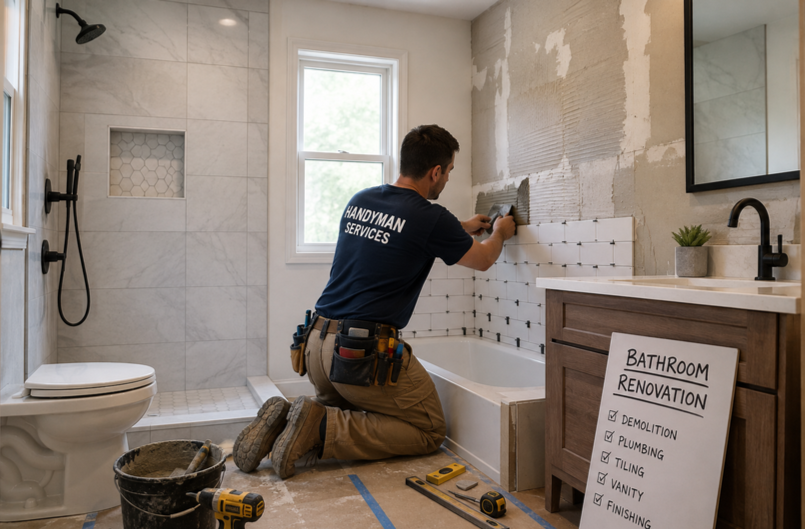
What Usually Does Not Fit Into $5,000
A complete bathroom gut renovation generally does not fit comfortably into a $5,000 budget, particularly in the Brampton and GTA market. A full renovation may require removing everything down to the studs and correcting several underlying problems before new finishes can be installed.
Projects that can quickly exceed this budget include:
- Removing all existing fixtures and finishes down to the studs.
- Replacing a tub or completely rebuilding a shower.
- Installing new waterproofing and tile throughout the shower area.
- Moving the toilet, vanity, sink, or shower location.
- Replacing damaged subflooring or wall framing.
- Upgrading electrical wiring or adding multiple pot lights.
- Replacing or relocating plumbing lines and drains.
- Installing premium fixtures or a frameless glass shower door.
- Adding heated flooring.
- Using high-end tile, quartz, custom cabinetry, or designer finishes.
Moving plumbing is one of the fastest ways to increase the cost of a bathroom project. Even when the new location appears to be only a short distance away, the work may involve opening walls or floors, modifying drains and water lines, repairing surfaces, and coordinating additional trades.
If the plumbing already works and the layout is functional, I usually recommend keeping it where it is. Homeowners can often achieve a much better result by spending the money on repairs, preparation, durable fixtures, and professional installation.
A Brampton Bathroom Refresh for Approximately $4,800
One project that comes to mind was a Brampton townhouse bathroom where the homeowner had a firm budget of roughly $5,000. The goal was to make the bathroom look cleaner and more modern without turning it into a full gut renovation.
The bathroom was functional but dated. It had an older vanity, worn flooring, outdated fixtures, stained caulking, and a tub and shower that were still structurally sound. The homeowner wanted the biggest visual improvement possible without spending money on changes that were not necessary.
We kept the existing tub, toilet location, plumbing layout, and most of the shower surround. The work included:
- Replacing the vanity and faucet.
- Updating the mirror and lighting.
- Replacing the flooring.
- Repairing and painting the walls.
- Removing and replacing deteriorated caulking.
- Completing smaller drywall and trim repairs.
- The final cost was approximately $4,800, depending on the exact materials selected. The bathroom looked substantially fresher and more modern, but the project stayed close to the original budget because we did not spend money changing components that were still doing their job.
This is the type of project where $5,000 can make a lot of sense. The bathroom receives a meaningful update, but the budget is not consumed by unnecessary demolition, plumbing relocation, or replacement of a good tub.
A Mississauga-Area Bathroom Project Near $7,000
A second example was a Mississauga-area bathroom where the homeowner initially wanted a more extensive renovation. The available budget was closer to $7,000, while a complete gut renovation could have required more than $10,000.
The bathroom had an older vanity and flooring, tired-looking finishes, and deteriorated grout and caulking around the tub. There were also signs that some existing work needed attention before new materials could simply be installed over it.
Instead of trying to create a completely redesigned bathroom, we focused on the areas that were actually failing. The work included:
- Repairing problem areas.
- Removing and replacing damaged grout and caulking.
- Installing a new vanity and fixtures.
- Updating the flooring and paint.
- Keeping the existing tub.
- Maintaining the general plumbing layout.
The project finished at approximately $6,500 to $7,000. It was not the completely redesigned bathroom the homeowner originally imagined, but it delivered better value because the available money went toward correcting problems and improving the parts of the room used every day.
This project illustrates an important point: a larger budget does not automatically mean you should increase the scope. Sometimes the best renovation is the one that solves the real problems without disturbing components that are still in good condition.
Hidden Costs That Can Break a Bathroom Budget
A $5,000 bathroom renovation often turns into a $7,000 or $8,000 project because of several smaller costs rather than one major expense. Homeowners may price out their new fixtures and finishes but overlook the labour and preparation required to install them properly.
Demolition and Disposal
Removing a vanity is different from removing a vanity, tile, drywall, flooring, a tub, and several layers of old materials. Demolition can involve careful removal, surface preparation, protection of surrounding areas, hauling, and disposal.
Disposal and hauling fees can add several hundred dollars, depending on the volume and type of debris. If those costs are not included in the original quote, they can create an unpleasant surprise before the new work has even started.
Waterproofing
Waterproofing is especially important around tubs and showers. Once the walls are opened, the existing waterproofing system may be damaged, outdated, or inadequate.
I would not recommend installing beautiful new tile over a questionable wet-area assembly simply because the budget is tight. A tile surface can look perfect while water is getting behind it. Correcting the waterproofing properly can add material and labour costs, but it protects the renovation and the home.
Water Damage and Subfloor Repairs
Older Brampton and GTA bathrooms may contain problems hidden behind finished surfaces. Demolition can reveal:
- Water-stained framing.
- Soft or damaged subflooring.
- Leaking shutoff valves.
- Deteriorated drywall.
- Outdated plumbing.
- Previous repairs that were not completed properly.
A new floor should not be installed over a soft or damaged subfloor. Similarly, damaged drywall, framing, or wet-area materials should be addressed before new finishes are installed.
Labour and Installation Materials
Labour is one of the costs homeowners underestimate most often. A bathroom renovation may involve removing old materials, preparing surfaces, installing fixtures, waterproofing, repairing drywall, tiling, grouting, caulking, painting, cleaning, and disposing of debris.
Installation materials also add up. Adhesives, fasteners, trim, shims, plumbing connections, waterproofing products, grout, caulking, and other supplies may not be included in the retail price of the main fixtures.
A homeowner might spend $1,500 on a vanity, $800 on a toilet and fixtures, and $1,000 on tile, then assume there is still plenty of money available. The remaining budget may not be enough to cover the labour and installation materials required to complete the job properly.
Fixture and Finish Upgrades
Many renovations begin with one set of materials and end with something much more expensive. A homeowner may start with a standard vanity but later choose quartz instead of laminate, a premium faucet, upgraded shower hardware, larger-format tile, better lighting, or a frameless glass door.
Each upgrade may seem manageable on its own. Together, they can add thousands of dollars.
Plumbing, Electrical, and Permits
Plumbing and electrical changes should be considered before the work starts. Relocating a toilet, changing a shower location, moving a vanity drain, adding pot lights, improving the bathroom fan, or correcting an existing electrical issue can change the project from a cosmetic refresh into a larger renovation.
Permit requirements depend on the proposed work and the municipality. A cosmetic update is different from work involving regulated plumbing, electrical, structural changes, or other alterations. Homeowners should determine what is required before work begins rather than discovering a permit issue halfway through the project.
Keep a Renovation Contingency
Whenever possible, I recommend keeping 10% to 15% of the budget in reserve. On a $5,000 renovation, that equals approximately $500 to $750.
I would rather see that money sitting untouched than already committed to a decorative upgrade. If everything goes smoothly, the homeowner can use it for a finishing detail at the end. If demolition reveals a damaged subfloor, leaking valve, or other necessary repair, the contingency can keep one surprise from stopping the renovation.
A contingency is particularly important in older homes. You cannot always identify every issue before demolition, especially when previous renovations have covered water damage or poor workmanship.
The safest approach is to decide which repairs are essential, choose materials before demolition, and avoid committing the full budget to fixtures and finishes.
Where I Would Spend the Money
With a $5,000 bathroom budget, I would spend money on the parts that protect the room and are difficult to redo later. These components may not be the most visible, but they have a major effect on how well the bathroom performs over time.
Waterproofing
Waterproofing is not the place to choose the lowest-cost option if the tub or shower surround is being opened. I would rather use a proven waterproofing system and good workmanship than save a small amount and risk water damage behind the finished wall.
Plumbing Components
You do not necessarily need the most expensive faucet or shower fixture. However, quality valves, supply lines, shutoffs, drains, and connections are important.
Saving $100 on a plumbing component is not worthwhile if it creates a leak behind a finished wall six months later.
Ventilation
A reliable bathroom fan is an underrated investment. Proper ventilation helps control moisture and can protect paint, caulking, grout, drywall, and other finishes.
I would rather install a dependable fan than spend the same money on an expensive decorative accessory that does not improve the room’s performance.
Subfloor and Surface Preparation
If the floor is soft, damaged, uneven, or shows evidence of previous water problems, fix the substrate before installing new flooring. Installing expensive tile over a questionable surface is backwards.
Good preparation may not be noticeable when the renovation is complete, but it affects the stability, appearance, and longevity of the finished floor.
Caulking and Wet-Area Finishing
Caulking is not an exciting upgrade, but it helps protect areas around tubs, showers, sinks, and other wet locations. The right product, proper surface preparation, and clean installation all matter.
Deteriorated caulking should not simply be covered with a new bead. The old material should be removed and the surface properly prepared first.
Where Homeowners Can Save
There are several places where homeowners can control costs without making the bathroom look cheap or perform poorly.
Mirrors are an easy place to save. A reasonably priced mirror can look excellent without costing hundreds of dollars for a designer label.
A stock vanity can also provide good value. I would not automatically choose the cheapest vanity, because construction quality and moisture resistance matter, but a homeowner does not need a $2,000 custom vanity to create an attractive bathroom.
Lighting is another area where it makes sense to be practical. I would prioritize a properly rated fixture, good light quality, and safe installation rather than paying extra for a designer name.
Paint, cabinet pulls, towel bars, toilet-paper holders, and other decorative hardware can also be selected carefully. Good preparation and appropriate bathroom paint matter more than choosing the most expensive product on the shelf.
For flooring and tile, I recommend buying a decent-quality material that suits the bathroom and investing in proper installation and surface preparation. Moderately priced tile installed correctly will often provide better value than expensive tile installed over a poor substrate.
Refresh or Full Renovation?
Before choosing fixtures or looking at design pictures, I would start with a simple inspection. The bathroom should be assessed in the following order:
- Water: Look for leaks, soft drywall, stains, damaged flooring, mold, cracked grout, and failed caulking.
- Structure: Check whether the floor is solid, the walls are sound, and the tub or shower is in good condition.
- Plumbing and electrical: Check drainage, shutoff valves, fixtures, ventilation, outlets, switches, and other systems.
- Appearance: After functional problems are identified, decide which features make the bathroom look dated.
If the tub or shower is sound, the plumbing is in the right location, the floor is solid, and the main problem is an outdated appearance, I would usually recommend a targeted refresh.
If the shower is leaking, the subfloor is damaged, the plumbing needs to move, the electrical system requires substantial work, or the tub and shower need to be completely rebuilt, the project has moved into larger-renovation territory.
At that point, I would rather tell a homeowner that $5,000 is not realistic for the desired scope than promise a renovation that cannot be completed properly within the budget.
Questions to Ask Before Hiring
A quote should explain the work clearly rather than provide one unexplained lump-sum number. I recommend asking every contractor or handyman:
- Exactly what is included in the labour price?
- Does the quote include demolition and disposal?
- Who supplies the fixtures and materials?
- Are adhesives, fasteners, trim, waterproofing, grout, and caulking included?
- What happens if water damage or a damaged subfloor is discovered?
- Are plumbing or electrical changes included?
- Are permits required for the proposed work?
- Who is responsible for obtaining any required permits?
- What specifically is excluded from the quote?
- How are unexpected repairs priced and approved?
- What is the expected timeline?
- What warranty or workmanship guarantee is provided?
The last question is particularly important. Homeowners should understand not only what they are paying for, but also what they are not paying for.
Three quotes are useful only when they describe comparable scopes of work. A low quote may not actually be less expensive if it excludes demolition, disposal, waterproofing, preparation, installation materials, or necessary repairs.
Bathroom Renovation Red Flags
I would be cautious about a price that is dramatically lower than the other quotes, especially when the contractor cannot explain the difference. Sometimes there is a legitimate reason, but important parts of the work may simply be excluded.
Other warning signs include:
- Refusing to provide a written scope of work.
- Providing only one unexplained lump-sum price.
- Pressuring you to start immediately.
- Requesting a large payment upfront.
- Refusing to explain how unexpected damage will be handled.
- Claiming that waterproofing or surface preparation is unnecessary because “the tile will seal it.”
- Being unable to provide reasonable references or comparable examples.
- Changing the price verbally instead of documenting approved changes.
I would not automatically choose the lowest quote. A detailed quote from someone who explains the scope, potential risks, exclusions, and contingency process is often more valuable than a cheaper number that leaves important questions unanswered.
How I Would Prioritize a $5,000 Budget
If I were helping someone allocate exactly $5,000, I would generally prioritize the work in this order:
- Safety and water protection.
- Plumbing and electrical problems.
- Structural and subfloor repairs.
- Ventilation.
- Tub and shower condition.
- Flooring and major fixtures.
- Cosmetic upgrades and accessories.
If the budget became tight, I would postpone an expensive mirror, decorative hardware, or other cosmetic upgrade before compromising waterproofing or installing a new floor over a damaged subfloor.
The most expensive-looking bathroom is not necessarily the best renovation. A bathroom that is properly prepared, protected from moisture, and fitted with durable components will usually provide better long-term value.
Final Answer: Is $5,000 Enough?
A $5,000 budget can be enough to remodel a bathroom when the project is planned as a targeted refresh. You may be able to replace the vanity, faucet, toilet, flooring, mirror, lighting, paint, trim, caulking, and selected finishes while keeping the existing tub, shower, plumbing layout, and major structural components.
It is usually not enough for a complete gut renovation involving new plumbing, extensive waterproofing, structural repairs, full shower reconstruction, premium tile, and high-end fixtures.
My overall advice is simple: renovate the problems first, then renovate the appearance. If the bathroom is fundamentally sound, a strategic $5,000 refresh can make a dramatic difference. If there are significant waterproofing, plumbing, electrical, or structural problems, increase the budget or reduce the scope rather than forcing a full renovation into an unrealistic amount.
A good contractor or handyman should be willing to have that conversation before the work starts, not after the budget has already been spent.