
Handyman Carpenter Services: What They Can and Cannot Do
If you live in Brampton, Mississauga, or the broader GTA, you’ve probably wondered when to call a handyman versus a specialized contractor. The truth is, a good handyman can handle a wide range of carpentry, repair, and finishing work, but there are clear limits based on safety, licensing, and the condition of your home. This post breaks down what handyman carpenter services can realistically do, where the boundaries should be, and how to avoid costly misunderstandings.
The Handyman and Carpentry Services I Perform Most Often
In the Brampton and Mississauga area, most of my work falls into practical repairs, carpentry, and finishing tasks that keep a home functioning properly and looking well maintained. These aren’t flashy renovations, they’re the jobs homeowners need done correctly but often don’t have the time, tools, or experience to tackle themselves.
Door Repairs and Installation
Door work is one of the most common calls I get. That includes adjusting doors that rub or won’t close properly, replacing hinges, installing interior or exterior doors, repairing frames, installing locks, and fixing damaged trim around door openings. These jobs often seem simple until you discover the opening is out of square or the framing has shifted over time.
Trim and Finish Carpentry
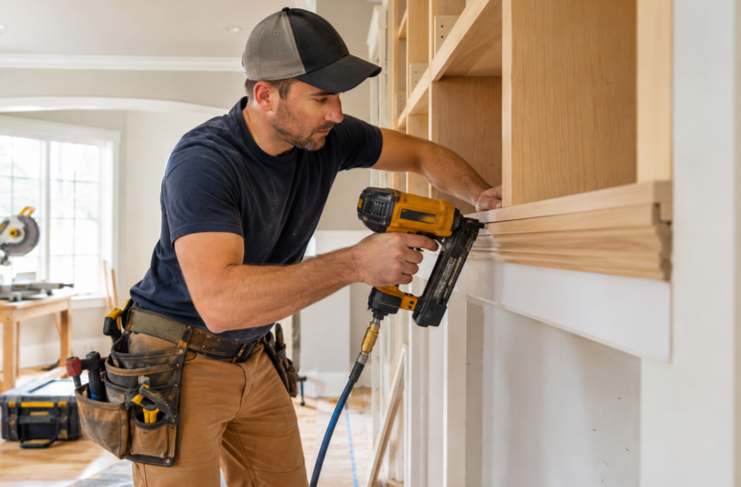
I regularly install or repair baseboards, door casing, window trim, crown moulding, and other finishing details. Many homeowners call me after renovating one part of their house and needing the trim replaced so everything looks consistent and finished.
Drywall Repair and Patching
Drywall work generates a lot of repeat business, especially after plumbing or electrical work, moving walls, or accidental damage. I handle smaller holes, cracks, damaged corners, and sections that need to be patched, taped, sanded, and prepared for painting.
General Carpentry and Wood Repairs
This includes repairing damaged framing, building or modifying shelves, installing wall-mounted storage, repairing cabinets, replacing damaged boards, and making custom adjustments around the house. Homeowners often call a handyman because they don’t need a full-scale contractor, they just need someone who can measure, build, repair, and finish the job properly.
Cabinet, Shelving, and Storage Installation
There’s steady demand for garage shelving, closet organizers, wall-mounted cabinets, floating shelves, laundry-room storage, and improvements to existing cabinetry. Good installation matters because walls aren’t always perfectly straight and mounting points need to be solid.
Small Bathroom and Kitchen Repairs
I’m often called for things like replacing damaged trim, repairing drywall, installing accessories, fixing cabinet components, replacing caulking, and handling the carpentry work around a larger renovation.
Where Repeat Business Comes From
Repeat customers usually aren’t calling for one specific service. They call because they know they can give me a list of several smaller jobs and have them handled during the same visit or project.
For example, a homeowner might have:
- A sticking bedroom door
- Damaged baseboard
- A few drywall holes
- Loose cabinet doors
- Shelves that need installing
Instead of calling five different tradespeople, they can have one handyman take care of the list. That’s where a good handyman provides real value in the GTA. It’s not necessarily about doing the biggest job, it’s about being able to look at a house, identify what needs attention, and handle a wide range of repairs and carpentry details efficiently.
The work I get called back for most often tends to be door repairs, trim and baseboards, drywall repairs, shelving and storage installation, cabinet adjustments, and general carpentry repairs. Once homeowners know the work is clean, properly measured, and finished rather than just patched temporarily, they tend to call again when the next project comes up.
Common Misunderstandings About What a Handyman Can Do
One of the biggest misconceptions homeowners have is that “handyman” means “can do absolutely anything.” A good handyman can handle a very wide range of carpentry, repair, installation, and finishing work, but there are limits based on safety, licensing, structural requirements, and the condition of the home.
“It’s Just a Small Job, So It Should Be Cheap”
Another common expectation is that a small job should automatically cost very little. A 30-minute repair might actually require an hour or more of travel, setup, measuring, material pickup, protection of the work area, installation, and cleanup.
Something like replacing a door or repairing trim can also uncover problems that weren’t visible initially. A damaged door frame, for example, might have underlying rot or framing issues. I try to explain those possibilities before starting rather than surprising the homeowner with an unexpected bill.
“The Walls Are Straight, Just Install the Trim”
This comes up constantly with baseboards, casing, shelving, and cabinetry. GTA homes aren’t always perfectly square or level. Walls can bow, floors can slope, and corners can be out of square.
Good finish carpentry involves measuring and making adjustments so the finished product looks intentional. Sometimes getting a baseboard or piece of trim to look perfect requires considerably more cutting, scribing, and fitting than homeowners expect.
“Can You Just Patch It and Make It Invisible?”
Homeowners sometimes expect a drywall repair to disappear completely with minimal work. The actual repair may be quick, but getting a seamless finish can require several rounds of compound, sanding, priming, and painting.
And if the existing wall has an older texture or multiple layers of paint, matching the surrounding surface can be more difficult than simply filling the hole.
“You Can Fix the Underlying Problem Too, Right?”
This is probably the most important distinction. A handyman can often repair the visible damage, but that doesn’t necessarily mean they should diagnose or correct a major underlying problem.
If drywall is cracking because of normal settling, that’s one thing. If I see significant structural movement, ongoing water intrusion, major foundation issues, or a potentially unsafe electrical or plumbing condition, I don’t want to simply cover it up with a cosmetic repair.
“One Quote Should Cover Everything”
I also encourage homeowners to understand the difference between a defined repair and an open-ended project.
If we’re replacing baseboards in one room, that’s relatively straightforward. If the request is “fix everything that’s wrong with the room,” we need to inspect it properly and define the scope. Otherwise, both the homeowner and contractor can have completely different ideas about what “everything” means.
My Biggest Rule for Homeowners
My general rule is: don’t hire a handyman because you expect them to be the cheapest person who can do everything. Hire one because you want someone who knows what they can handle, does those jobs properly, and knows when a project needs another trade or specialist.
That’s especially important in Brampton, Mississauga, and older GTA homes where you can open up a seemingly simple repair and discover previous renovations, uneven framing, moisture damage, or other surprises. A professional handyman should be honest about those situations rather than promising to fix something that’s outside their expertise.
Real Jobs Where Expectations Didn’t Match Reality
Case Study 1: A “Simple” Door Replacement That Wasn’t So Simple
One job that comes up fairly often started as a homeowner asking me to replace an interior door and install new trim. On the surface, it sounded like a straightforward carpentry job.
Once I removed the existing door and started checking the opening, I found that the frame wasn’t square and the jamb had been poorly installed previously. The floor also wasn’t perfectly level, so simply installing the new pre-hung door would have left it rubbing and sitting incorrectly.
Rather than just forcing the new door into the opening, I stopped and explained what I had found. I broke the job into the original scope—door installation and trim, and the additional work required to properly correct the opening. I gave the homeowner the option of proceeding with the additional framing and adjustment work or leaving the opening as-is and accepting a compromised installation.
We agreed on the revised scope and price before I continued. I then corrected the opening, installed and adjusted the door, and finished the casing and trim.
The important part wasn’t that the job became more expensive. It was that the homeowner understood why it became more expensive before the extra work was done. In the end, they got a door that closed properly and looked like it belonged there rather than having a new door installed into a bad opening.
Case Study 2: A Small Drywall Repair That Revealed a Bigger Problem
Another type of job I’ve encountered is when a homeowner calls for what appears to be a simple drywall repair—usually a damaged section of wall that they want patched and painted.
In one situation, the homeowner expected me to cut out the damaged drywall, patch it, sand it, and leave it ready for paint. When I inspected the area more closely, there were signs that the damage wasn’t simply cosmetic. Before closing everything back up, I wanted to understand what had caused it.
That changed the scope of the job. Instead of immediately repairing the drywall, I explained to the homeowner that covering the damage without addressing the source could simply result in the same problem coming back.
We separated the work into two stages: determine what could reasonably be addressed as part of the handyman scope, and identify anything that required another trade or specialist. I kept the homeowner informed rather than proceeding with additional work without approval.
That’s something I consider extremely important with handyman work. The worst thing you can do is make a small repair look finished while leaving a potentially bigger problem hidden behind it.
In both situations, the lesson is the same: I try to give homeowners a clear price and scope for what we know at the beginning, but I also explain that opening something up can reveal conditions that weren’t visible during the initial estimate. If that happens, I communicate it immediately, explain the options, and get approval before changing the scope.
For me, that’s what prevents a surprise bill from becoming a bad customer experience.
My “Line in the Sand” for Jobs I Will Not Do
My line in the sand is pretty straightforward: if a job involves significant structural changes, major electrical or plumbing work, or specialized work that requires a licensed trade or permit, I don’t try to stretch my handyman scope to cover it.
For example, I’m comfortable with carpentry repairs, trim, doors, cabinets, shelving, drywall repairs, and many general home-maintenance projects. But if a homeowner asks me to remove a load-bearing wall, substantially alter structural framing, rewire a house, relocate major plumbing, or do work that requires a specific permit or licensed trade, that’s where I’ll recommend bringing in the appropriate professional.
I’m also cautious when I uncover something unexpected. If I’m repairing drywall and discover evidence of significant water intrusion, structural movement, or another underlying problem, I’m not going to simply cover it up and call the job finished. I’ll explain what I’ve found and recommend getting the right person involved.
How I Explain It to Homeowners
I try not to make the conversation sound like, “That’s not my problem.” Instead, I’ll explain why I’m drawing the boundary.
I’ll usually say something along the lines of:
“I can take care of the carpentry and finishing work, but this part needs to be handled by the appropriate licensed specialist. I don’t want to do something outside my scope and leave you with a safety issue, inspection problem, or an expensive repair later.”
That approach usually goes over much better because the homeowner understands that I’m not refusing just because I don’t want the work. I’m refusing because I don’t want to give them the wrong solution.
Where Handyman Work and Specialist Work Meet
There are also plenty of projects where I can work alongside another trade. For example, an electrician might handle the electrical work while I take care of drywall repair, framing, trim, or finishing afterward.
I actually think that’s one of the advantages of hiring an experienced handyman. You don’t necessarily need one person to do everything. You need someone who knows what they can do well, where their responsibility ends, and when another professional needs to be brought in.
My philosophy is simple: I would rather turn down a job than take someone’s money for work I’m not properly equipped or authorized to perform. That protects the homeowner, protects the property, and ultimately protects the reputation I’ve built through my carpentry and handyman work.
A Simple Rule of Thumb for Brampton and Mississauga Homeowners
I tell homeowners to start by asking one question: “Is this primarily a repair or installation job, or am I dealing with a problem inside the house’s major systems?”
If it’s a repair or installation, things like doors, baseboards, trim, drywall patches, shelving, cabinets, minor carpentry, caulking, hardware, or general home repairs—that’s usually a good handyman job.
For example, if your bedroom door doesn’t close properly, a section of baseboard is damaged, you need shelves installed, or you have drywall that needs patching, there’s usually no reason to bring in a specialized contractor.
On the other hand, if the issue involves structural integrity, major electrical work, significant plumbing, gas, HVAC, foundation problems, or another specialized system, I’d recommend calling the appropriate specialist. The same applies when a permit or specific licensing requirement is involved.
Don’t Confuse the Symptom With the Problem
One thing I always caution homeowners about is hiring someone based only on what they can see.
For example, a crack in drywall might be a simple cosmetic repair, but if there are signs of significant movement behind it, repeatedly repairing the crack isn’t necessarily the right answer. Similarly, a damaged section of wall might look like a drywall job when the real issue is ongoing moisture.
That’s where an experienced handyman should be willing to say, “I can repair this, but first we need to understand why it’s happening.”
My Quick Decision Guide
Call a handyman when:
- A door needs repair or adjustment
- Baseboards or trim need installation or replacement
- Drywall has minor holes or damage
- Cabinets, shelving, or hardware need installation
- You have several small carpentry or maintenance jobs
- You need general repairs or finishing work
Call a specialist when:
- A load-bearing wall or major structural element is involved
- There’s significant foundation movement or structural damage
- Major electrical or plumbing systems need alteration
- Gas, HVAC, or other specialized systems are involved
- The work requires a specific licensed trade or permit
- You don’t know what is causing the problem and there are signs of a serious underlying issue
My biggest advice to Brampton and Mississauga homeowners is don’t choose based solely on the cheapest quote. Choose the person whose qualifications match the problem. A good handyman should be comfortable handling the work that’s within their scope—and equally comfortable telling you when it’s time to bring in a specialist.
That boundary is actually a sign of a professional, not a limitation.